
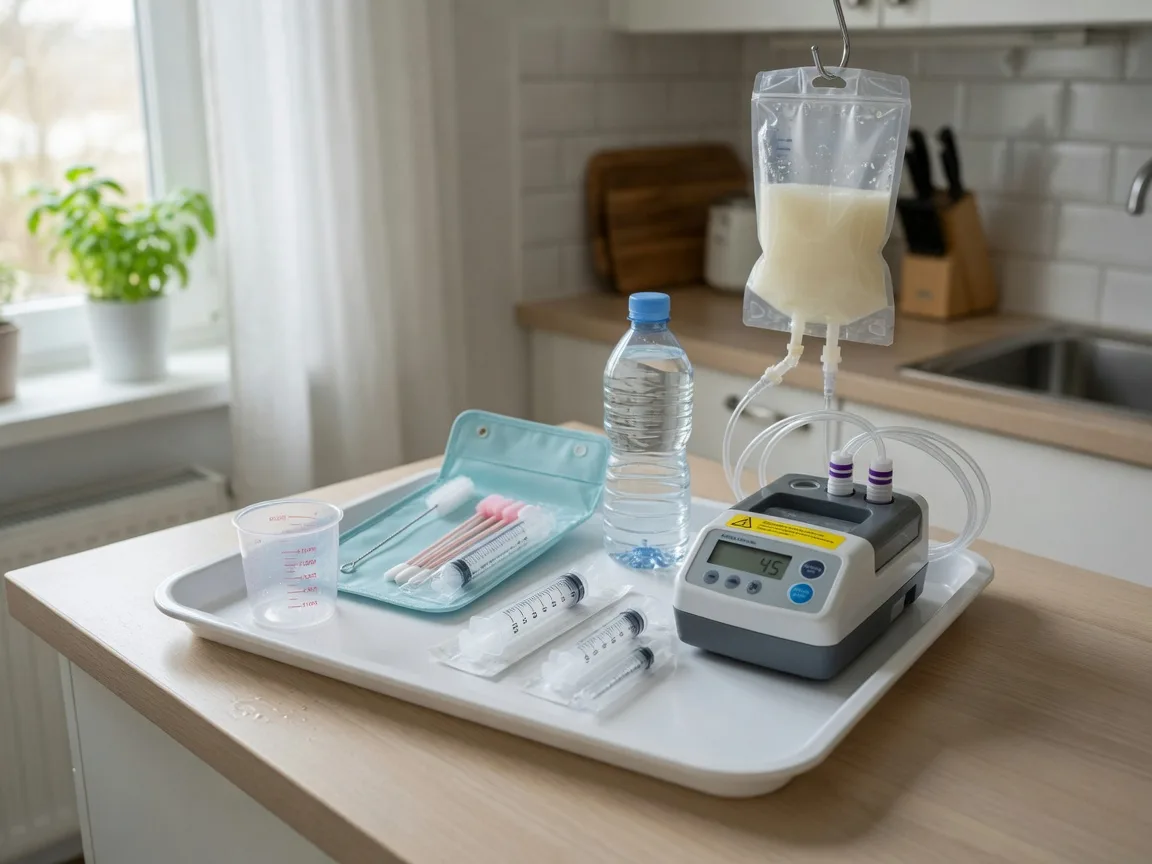
The feeding routine
Enteral feeding follows a schedule set by the physician and dietitian: formula type, rate, volume, water flushes, and the position the patient must stay in during and after each feeding. Consistency protects the patient from aspiration and intolerance.
Tube upkeep
The site must stay clean and dry, the tube must be flushed on schedule, and placement must be verified before each feeding according to the plan. Dislodgement is a common cause of emergency room visits, and careful routine work prevents it.
Medications through the tube
Not every medication can be crushed, and crushing rules vary by drug. Medications given through a feeding tube are prepared and administered per pharmacy guidance, with proper flushes between each one.
Signs that need a call
Call the care team for signs of aspiration, persistent vomiting, a blocked or dislodged tube, skin breakdown at the site, or a patient who is not tolerating feeds. These are clinical events that need a skilled response, not a family guess.
Who should be at home
Some enteral patients need nursing for the feedings and medication administration themselves; others need nursing visits and a trained family caregiver. The patient's condition and orders determine the level, and a clinical review should clarify it.
Your Next Step
Ask Whether Nursing Is Part of the Plan
Liberty's RNs review the enteral plan, the medication list, and the payer before recommending a structure.
Ask Whether Nursing Is Part of the Plan