
Entry and mobility paths
Clear every path the patient travels of rugs, cords, and clutter, from the bed to the bathroom and to the entry. Check thresholds and steps, and consider a ramp when a step is a daily risk. Lighting should cover every hallway the patient may use at night.
The bathroom
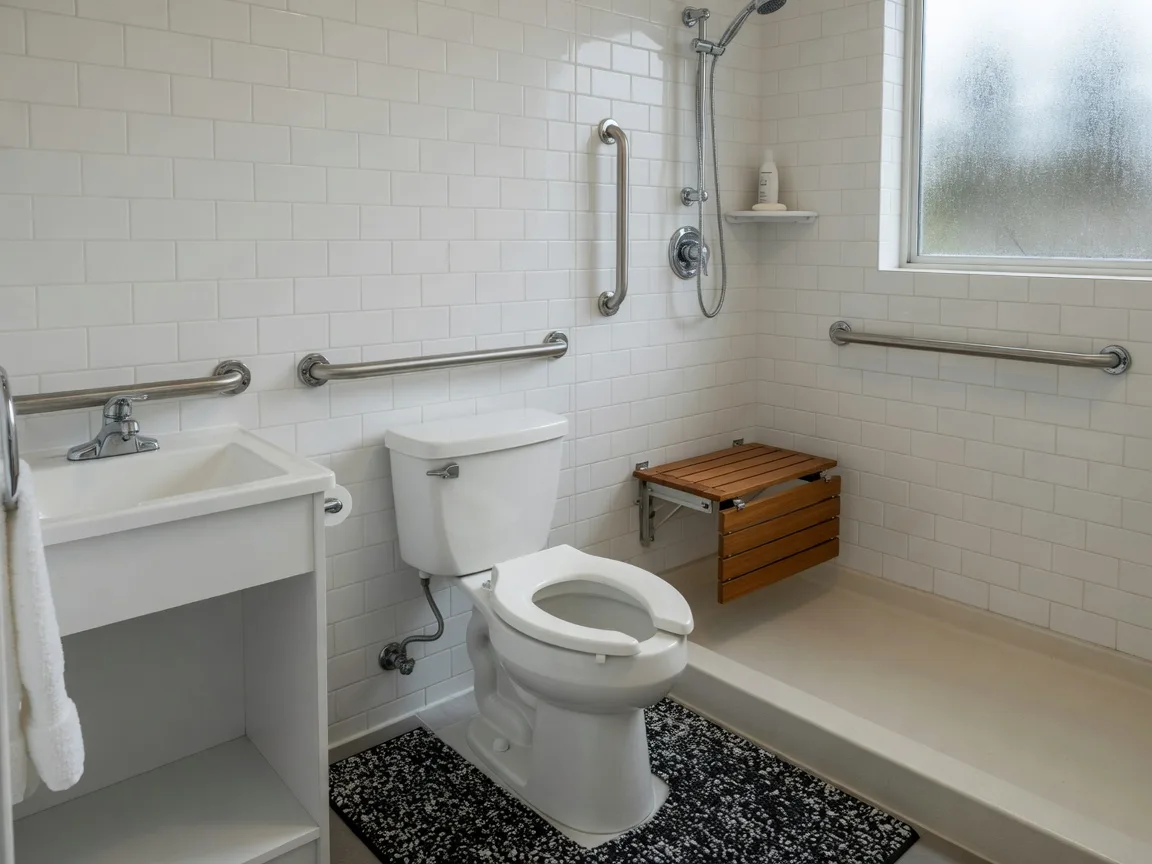
The bathroom is where most home falls happen. Grab bars at the toilet and shower, a raised toilet seat, a non-slip surface, and a shower chair or transfer bench turn a high-risk room into a manageable one. These modifications matter for every medically fragile patient, not just the elderly.
Medication organization
Keep all medications, including PRN drugs and supplements, in one organized space with the reconciled list posted nearby. Never keep look-alike bottles together without labels, and store medications out of reach of children and pets.
Equipment safety
Oxygen must never be near flames or heat sources. Ventilators and pumps need their own circuits, and cords should be secured out of the walking path. Keep the supplier's after-hours number where the whole household can see it.
When the home itself needs work
Some safety fixes are beyond a family's weekend project: structural ramps, bathroom reconfiguration, and threshold work. Tasking a licensed professional who specializes in aging-in-place and accessibility prevents both falls and building headaches.
Your Next Step
Explore Home Safety and Accessibility
Liberty's founder also leads an affiliated aging-in-place and home-modification company for families whose care plans reveal environmental needs.
Explore Home Safety and Accessibility