
The daily routine
Tracheostomy care includes routine suctioning, cleaning and monitoring the stoma, changing ties and dressings, managing humidity, and observing the patient's respiratory status hour to hour. Each step follows the physician's orders and the hospital's discharge teaching.
Why continuous skill matters
A blocked airway is an emergency measured in minutes. Whoever is at the bedside must know how to suction, reposition the patient, recognize a changing airway, and act before the situation becomes critical. That is why trach patients are typically staffed with trained nurses rather than general caregivers.
Emergency planning
Every household with a trach patient needs a written emergency plan: what to do for a dislodged tube, a blocked airway, or a worsening respiratory state, and when to call 911. The plan should be rehearsed with the family before the patient comes home.
Caregiver training
Families are still part of the team. Discharge teams and nursing agencies train family caregivers in the routine and the emergency steps, so the household is never dependent on a single person.
Equipment and supplies
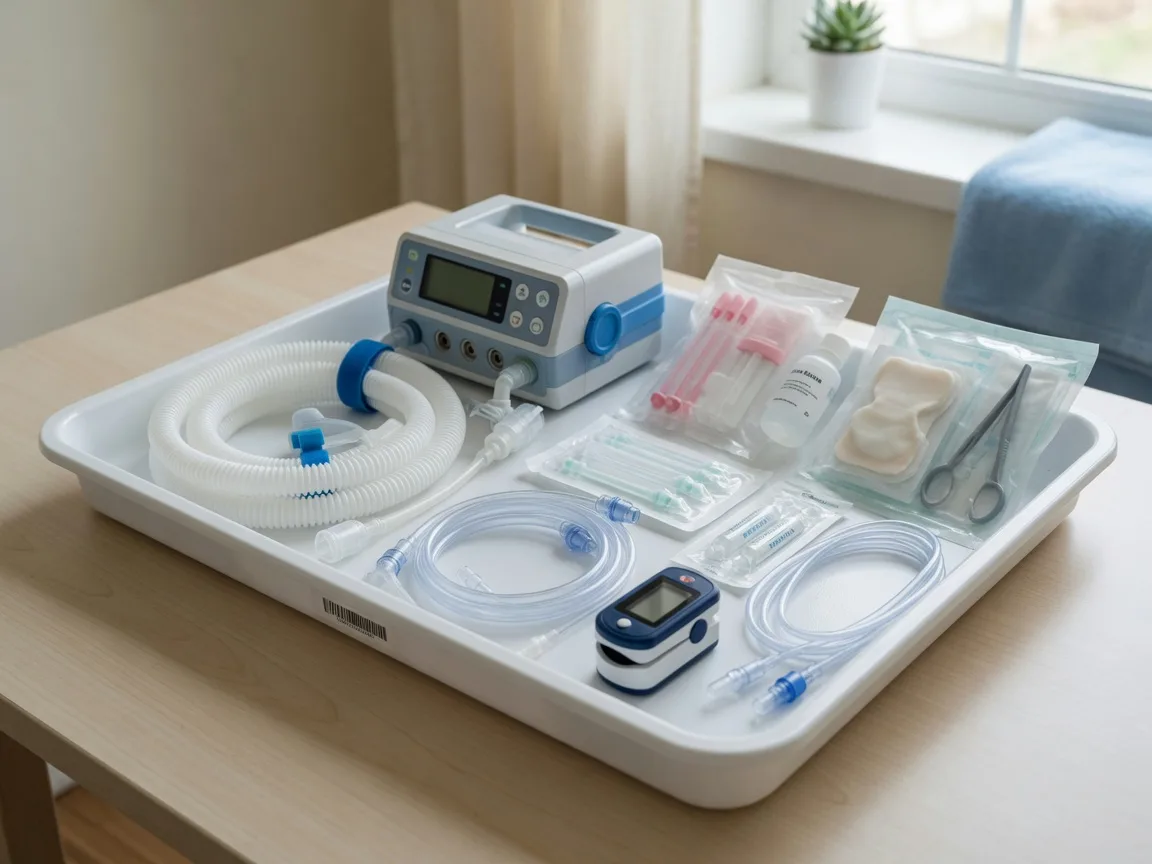
Suction machines, back-up supplies, and ventilator or oxygen equipment all have suppliers and maintenance schedules. Confirm delivery, training, and after-hours support before discharge day.
Your Next Step
Refer a Patient With a Tracheostomy
Trach referrals are reviewed quickly so discharge planning can continue without delay.
Refer a Patient With a Tracheostomy